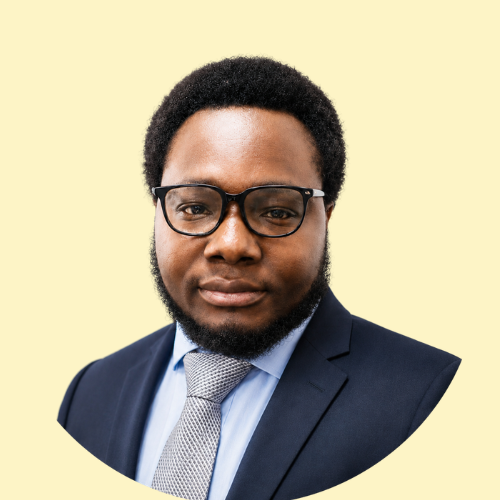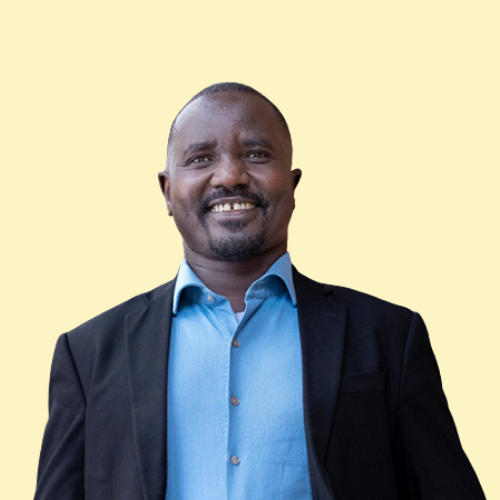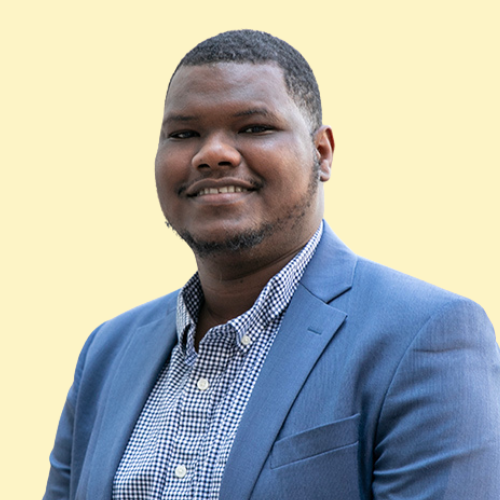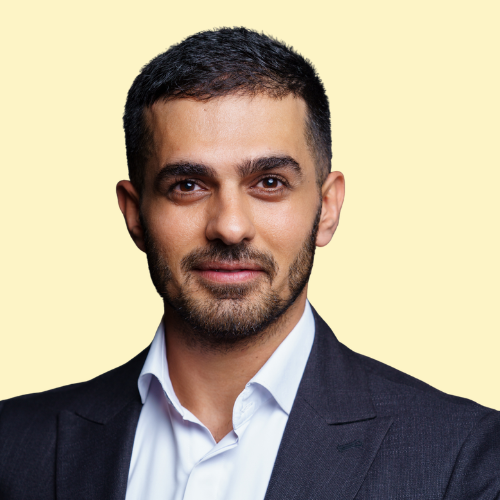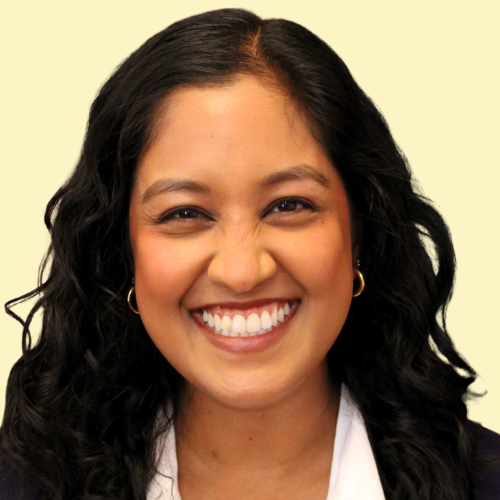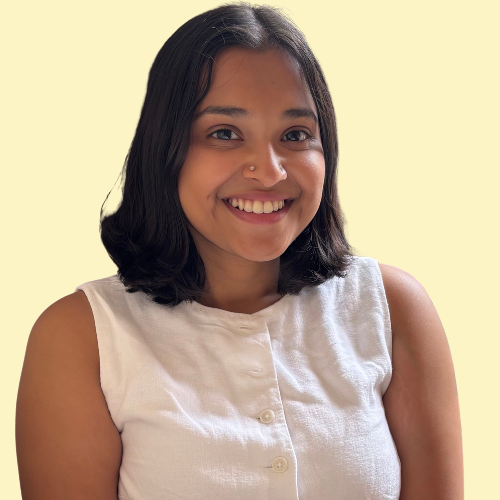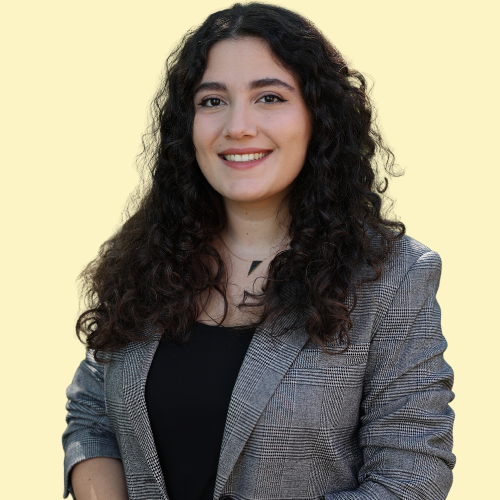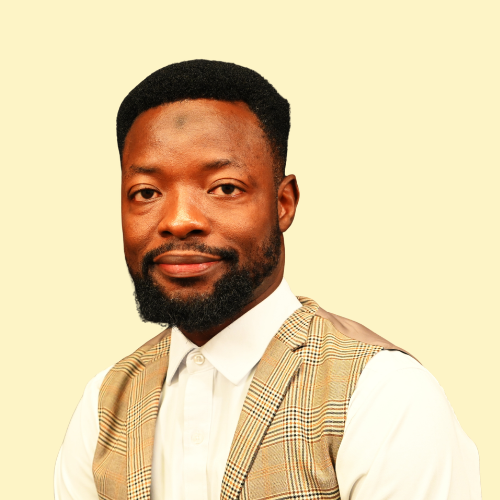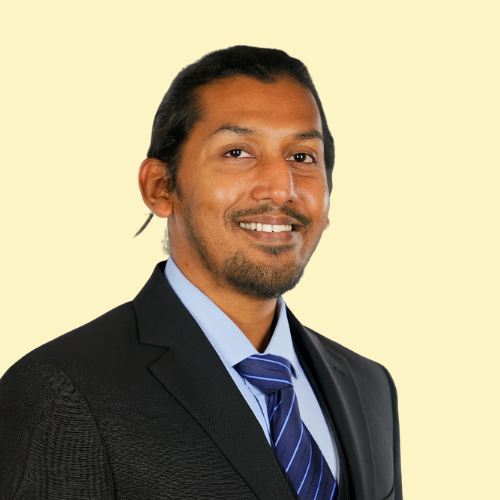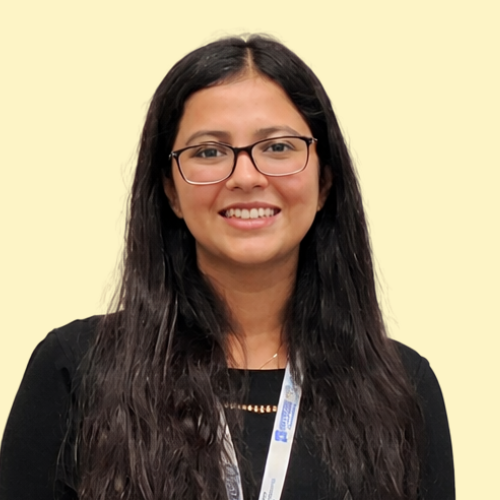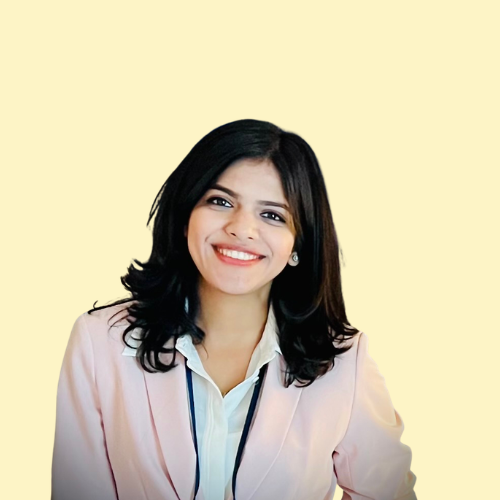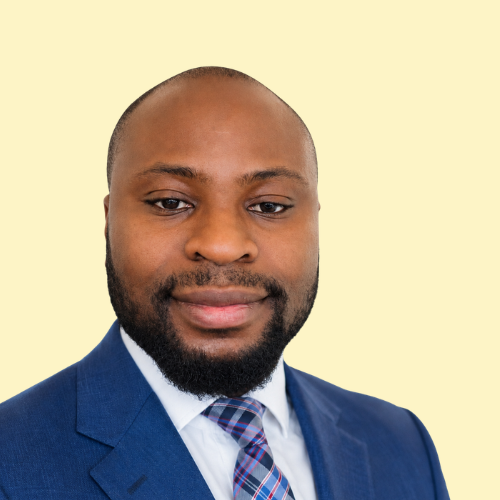
Excellence, Equity, and Inclusion Fellowship

The APPAM Excellence, Equity, and Inclusion (EEI) Fellowship supports students and professionals who have overcome substantial obstacles presented by their backgrounds or life circumstances as they pursue education and careers in public policy, analysis, and management.

Since its launch in 2016, the Fellowship has supported more than 300 emerging researchers by sponsoring their participation in the APPAM Annual Fall Research Conference.

Fellows receive travel, lodging, and conference registration, along with distinguished recognition and opportunities for networking, leadership development, and lasting engagement with the APPAM community. Through the Fellowship, APPAM seeks to expand opportunities in public policy while fostering the next generation of scholars and leaders in the field.

Formerly known as the APPAM Equity and Inclusion Fellowship, the program was renamed the APPAM Excellence, Equity, and Inclusion (EEI) Fellowship to better reflect the academic excellence, merit, and leadership of its recipients. The Fellowship has also been redesigned from a one-year program to a more intentional two-year experience with a cohort of 26 Fellows, creating greater opportunities for meaningful connections, sustained participation, and professional growth.

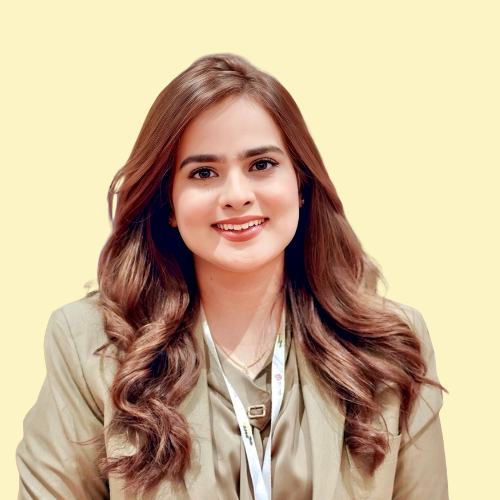
To further strengthen the Fellowship community, APPAM has created the EEI Fellow Liaison role. Serving on APPAM’s Diversity, Equity & Inclusion Committee as an at-large member, the Liaison helps connect current and past Fellows, provides insight from a recent Fellow’s perspective, and supports ongoing engagement with the organization. The 2026 EEI Fellow Liaison is Hojung Lee of Rice University.


Congratulations to the 2026 Cohort!

2026 Student Fellows

The APPAM Excellence, Equity, and Inclusion (EEI) Fellowship program supports the participation of students from traditionally underrepresented backgrounds at the Annual Fall Research Conference.

This fellowship program aims to introduce recipients to the world of public policy and APPAM and foster a lifelong affiliation and engagement with both—special thanks to the Equity & Inclusion Fellowship Selection Committee for reviewing applications and selecting the recipients.

Congratulations to the 2026 APPAM Excellence, Equity, and Inclusion Fellowship recipients!

Godwin Aipoh, Georgia State University
Samuel Akau, University of North Carolina, Chapel Hill
Mohammed Bah, University of California, Irvine
Mehrdad Baratian, Tulane University
Molly Basdeo Mountjoy, Rutgers University, New Brunswick
Sampurna Basu, University of Massachusetts, Boston
Saria Bechara, Washington University in St. Louis
Issa Belmond Thullah, Virginia Commonwealth University
Salman Bin Habib, University of Texas, Dallas
Raka Datta, Georgia State University
Shivani Gupta, University of Texas, Dallas
Ashraf Haque, Syracuse University
Ojooluwa Ibiloye, University of Delaware
Natalie Jones-Kerwin, University of Wisconsin, Madison
Moomal Khan, University of Connecticut
Haofei Li, The Ohio State University
Mericel Mirabal, University of Michigan
Pooja Paode, University of Wisconsin, Madison
Sidra Riaz, Florida International University
Hasti Rostami, St. John’s University

2026 Undergraduate Fellows

The APPAM Excellence, Equity, and Inclusion Fellowship program introduces the field of public policy to undergraduates who might not otherwise be familiar with it. It also increases the pipeline of diverse students into APPAM institutional member graduate public policy and public affairs schools. The recipients will be recognized for their accomplishments. They will also have opportunities to formally network with each other, Student Equity and Inclusion Fellowship Recipients, and with Policy Council and Diversity Committee members. They will also have many opportunities to network informally with other students and professionals during the conference.

Congratulations to the 2026 APPAM Excellence, Equity, and Inclusion Undergraduate Fellowship Recipients!

Michelle Elliott, University of Michigan
Ashley Hui Ying Teh, University of California, Los Angeles
Dalton Malmin, Vanderbilt University

2026 Young Professional Fellows

The APPAM Excellence, Equity, and Inclusion (EEI) Young Professional Fellowship will support young professionals from traditionally underrepresented backgrounds at the APPAM Fall Research Conference.

Applicants must be within five years of receiving their master’s or PhD Degrees. The recipients will be recognized for their accomplishments. They will also have opportunities to formally network with each other, Student Equity and Inclusion Fellowship Recipients, and with Policy Council and Diversity Committee members. They will also have many opportunities to informally network with other students and professionals during the Annual Fall Research Conference.

Congratulations to the 2026 Equity & Inclusion Fellowship recipients!

Mahana Barbadillo, New York City Department of Health & Mental Hygiene
Enrique Eduardo Valencia Lopez, University of California, Berkeley
JuneMi Jennifer Kang, Harvard University / Magpie Literacy

Meet the 2026 APPAM Excellence, Equity, and Inclusion Student Fellows

Godwin Aipoh, Georgia State University

Godwin Aipoh is a PhD candidate in Economics at Georgia State University, specializing in health economics, development economics, and applied microeconomics. His research examines how public policies, healthcare delivery systems, and institutional disruptions shape health outcomes and well-being among vulnerable populations in the United States and Sub-Saharan Africa.

His job market paper studies whether drone delivery of medical supplies influenced maternal behavior and child health outcomes. His broader work spans conflict and neonatal mortality in Nigeria and the intergenerational health effects of alcohol taxes, reflecting a research agenda anchored to a single question: what determines whether vulnerable populations thrive or fall behind?

A first-generation scholar from Nigeria, Godwin brings a personal commitment to questions of equity, access, and opportunity that runs through both his research and service. He founded GroomDNext, an annual mentorship and research competition for undergraduates. He holds a Master of Arts in Economics from Georgia State University.
Godwin is a participant in the NBER Aging and Health Mentoring Program and is currently on the academic job market.

Samuel Garang Akau, University of North Carolina

Samuel Garang Akau is a PhD candidate in International Development Policy at the University of North Carolina at Chapel Hill. His research sits at the intersection of development economics, political economy, and peacebuilding, with a focus on food insecurity in fragile and conflict-affected settings in Sub-Saharan Africa. His dissertation develops a multi-scalar framework linking conflict traps, poverty traps, and population dynamics—including pressures affecting women and youth—to explain persistent food insecurity across national, subnational, and household levels.

Before joining UNC, Samuel completed his undergraduate studies at Stanford University and spent more than 10 years working across the public and private sectors in South Sudan and Kenya, where he engaged directly with development programming, policy analysis, and post-conflict recovery efforts. During this period, he published policy-oriented research, analytical reports, and public scholarship on conflict, displacement, and development in fragile contexts. He also co-founded Sawa Sawa Network, a media and research platform focused on peacebuilding and evidence-based development in South Sudan and the broader region.

Mohammed W. Bah, University of California, Irvine

Mohammed W. Bah is a Ph.D. student in Urban and Environmental Planning and Policy at the University of California, Irvine. Originally from Liberia, he studies climate adaptation, environmental governance, and environmental justice in vulnerable coastal communities, with a focus on coastal erosion, flooding, and managed retreat. He earned a B.A. in Political Science from the University of Rochester.

His research examines how communities respond to environmental threats in contexts shaped by weak institutional capacity and uneven governance. Using mixed-methods approaches that combine interviews, survey analysis, participatory fieldwork, and geospatial tools, his work addresses coastal communities in both the Global South and the United States. In Liberia, he investigates collective action and climate adaptation in informal coastal settlements. In California, he conducts community-engaged research on coastal resilience, public perceptions of sea-level rise, and Indigenous environmental justice.

Mohammed’s research has been published in Case Studies in the Environment and Progress in Disaster Science and presented at APPAM, MPSA, and MIT. He also has practical policy experience ranging from the New York City Department of Environmental Protection to the Surfrider Foundation. Beyond research, Mohammed is committed to mentorship, public engagement, and expanding opportunities for underrepresented students. Through policy-relevant scholarship and community-engaged research, he seeks to advance more just and inclusive climate adaptation policies for marginalized communities.

Mehrdad Baratian, Tulane University

Mehrdad Baratian is a Ph.D. candidate in Economics at Tulane University, working in applied microeconomics and health economics. His research asks how public programs change the lives of the people who grow up under them.

In his job market paper, Mehrdad studies the 1990s shift from cash assistance to work-first welfare. Using the Panel Study of Income Dynamics and each child’s state of birth, he measures how much of the first five years of life a child spent under the new rules and follows those children into adulthood. His research finds that adults who were exposed longer are more likely to be employed and that the length of exposure matters more than how harsh a state’s rules were.

In a second paper, Mehrdad uses natural language processing on biomedical research to show how the COVID-19 shock moved scientific effort across fields. A third paper estimates how the generosity of SNAP benefits affects mental health. He will present at the APPAM Fall Research Conference in Boston this November.

Mehrdad came to economics after studying mechanical engineering in Isfahan and business administration in Tehran and plans to continue working on questions where the design of a program can be traced into long-run outcomes.

Molly Basdeo Mountjoy, Rutgers University, New Brunswick

Molly Basdeo Mountjoy is a Ph.D. candidate in Planning and Public Policy at the Bloustein School at Rutgers University–New Brunswick. Her research interests include racial justice, childhood poverty, gender equity, educational equity, U.S. rural student populations, children of immigrant experiences, and curriculum design and instruction.

Her dissertation focuses on school segregation and integration policies in New Jersey, examined through the perspectives of Black and Latino parents and guardians. At Bloustein, Molly teaches an undergraduate leadership seminar, serves on the Diversity, Equity, Inclusion, and Belonging Committee, and has worked as a research assistant for the New Jersey State Policy Lab. She has also completed graduate fellowships at the Eagleton Institute of Politics and the New Jersey-Philadelphia Chapter of Scholars Strategy Network.

Molly is a member of multiple state education advocacy groups and task forces focused on education equity. Before her doctoral studies, she held professional roles at various higher education institutions focusing on teaching, facilitation, curriculum development, assessing student learning, advancing equity and inclusion, mentoring students, managing program budgets, and large-scale event planning.

She earned her master’s degree in Higher Education Administration from the University of South Carolina and a bachelor’s degree in Middle Grades Education with honors from North Carolina State University.
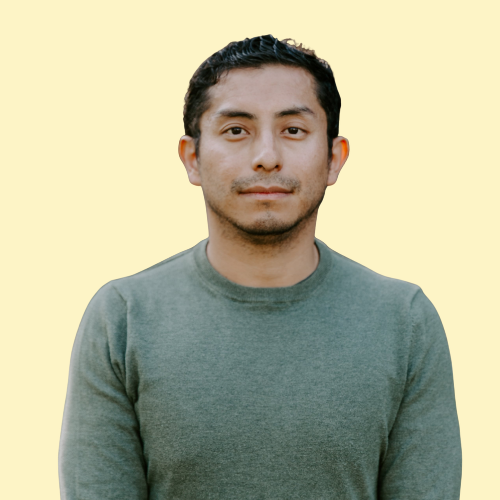
Sampurna Basu, University of Massachusetts, Boston

Sampurna Basu is a PhD candidate in the Department of Public Policy at the University of Massachusetts Boston. Her research centers on the geographic implications of access to healthcare. By incorporating a human-centered, mixed-methods approach, she aims to contribute to reforms addressing the disparate impact of socio-demographic and economic indicators on health, healthcare access, and health systems management.

Sampurna is also an impact evaluation professional committed to contributing to socioeconomic development and social justice through research and advocacy. With three years of experience in financial and social well-being research in developing countries, she has contributed to policy solutions addressing poverty, financial inequity, unemployment, and access to healthcare among vulnerable communities.

As a collaborative and proactive professional, Sampurna believes in cultivating a work environment where knowledge creation and continuous learning for social change are at the helm. Outside of work, she enjoys long walks, discovering new eateries and cafes, and reading fiction.

Saria Bechara, Washington University in St. Louis

Saria Bechara is a Social Work PhD student at Washington University in St. Louis, where she studies refugee well-being and integration. She holds a Bachelor of Science in Biology and a Bachelor of Arts in Psychology from the Lebanese American University, as well as a Master of Social Work from the University of Michigan.

Her research interests include understanding how exposure to conflict and forced migration affects well-being, exploring the interactions between different dimensions of well-being, examining how policy and contextual factors influence individual- and community-level outcomes, and identifying and building on individual- and community-level protective factors.

Saria’s scholarship is grounded in lived and professional experience. Growing up in Lebanon during periods of conflict and working as a psychosocial support provider with Syrian refugee caregivers and children during the country’s economic collapse, the Beirut Port Explosion, and the COVID-19 pandemic, she experienced and witnessed how rapidly security can disappear for communities, how profoundly policy failures shape human lives, and the gaps between direct service and the structural change that displaced communities need. This background brought her to research and keeps her committed to producing scholarship that is accountable to the communities it concerns.

Issa Belmond Thullah, Virginia Commonwealth University

Issa Belmond Thullah is a first-generation scholar from a low-income background. He grew up in Sierra Leone during the civil war, a period marked by collapsing institutions, widespread insecurity, and the loss of several family members and friends. Those early experiences exposed him to the consequences of policy failures and ignited a profound determination to pursue education as a pathway to healing, resilience, and social change.

In 2015, Issa earned a BA in Political Science with first-class honors and spent four years at Sierra Leone’s Office of National Security, contributing to policy development. In 2019, he was awarded a Commonwealth Scholarship to study Applied Security and Strategy in the United Kingdom, graduating among the top of his class. He returned to the Office of National Security as Team Lead and Manager of the National Situation Room.

In 2024, Issa began his Ph.D. in Public Policy and Administration at Virginia Commonwealth University and earned the 2025 Dominion Justice in Society Scholarship Award for exceptional scholarly achievement. In 2026, he received the Outstanding Doctoral Student Award for academic excellence and contributions to the field. These experiences continue to inform his research focus.

Salman Bin Habib, The University of Texas at Dallas

Salman Bin Habib is a PhD candidate (ABD) in Public Affairs at The University of Texas at Dallas, specializing in nonprofit finance and public budgeting. His research examines how nonprofit revenue structures, financial vulnerability, and public policies influence organizational strategy and community outcomes. His dissertation compares the effects of donative and commercial revenue reliance among nonprofit organizations in the United States and Canada.

His broader research includes nonprofit accountability, municipal finance, administrative burden, diversity in government, homelessness, social finance, and artificial intelligence in public services. His scholarship has appeared in journals including Voluntas, Governance, and Nonprofit and Voluntary Sector Quarterly, and he has presented research at conferences organized by ASPA, ARNOVA, ABFM, and AOM.

In addition to his research, Salman teaches undergraduate courses in policy research and government management. He has also delivered guest lectures on quantitative analysis, grant writing, generative artificial intelligence, and ethical leadership. Through leadership and service roles at UT Dallas and ARNOVA, he supports graduate students, international engagement, and scholarly collaboration. His long-term goal is to produce rigorous, accessible research that helps public and nonprofit organizations make more equitable, financially sustainable, and evidence-informed decisions.

Raka Datta, Georgia State University

Raka Datta is a Ph.D. candidate in Economics at Georgia State University’s Andrew Young School of Policy Studies. Her research lies at the intersection of health economics and public policy, focusing on how policy exposure shapes mortality, maternal health, and intergenerational outcomes. Her job market paper estimates the impact of alcohol access shocks on mortality.

Raka was awarded the Andrew Young Fellowship and the E.D. Jack Dunn Fellowship and Research Fund at Georgia State University to support her research. Two of her papers on mortality and birth settings are currently under revise-and-resubmit, and she has several working papers in her pipeline. She presents regularly at ASHEcon, the Southern Economic Association, the Population Association of America, and APPAM conferences.

Before joining Georgia State University, Raka earned an M.Sc. in Economics from the University of Bonn and worked as a research assistant at IZA. She serves as an instructor for Principles of Microeconomics at GSU, where her teaching reflects her investment in making economics accessible to undergraduates. Growing up in a small village in North Bengal, India, she was the first woman in her community to pursue higher education abroad.

Shivani Gupta, University of Georgia

Shivani Gupta is a consultant with the World Bank’s Africa Gender Innovation Lab, where she supports the design and implementation of research on digital mental health interventions, and with the Gender Group, where she contributes to data analytics and global evidence on gender and digital inclusion.

She is currently a PhD candidate in Applied Economics at the University of Georgia, with research focused on gender, labor markets, entrepreneurship, and mental health in development contexts. She uses advanced causal inference methods across randomized and quasi-experimental evaluations to generate policy-relevant evidence.

Her dissertation examines how the distribution of unpaid household labor affects mental well-being and economic outcomes. Her job market paper is a randomized controlled trial in Ethiopia evaluating a phone-based intervention designed to increase men’s participation in domestic and care work.

With nearly a decade of experience in development and behavioral economics, Shivani has contributed to several large-scale impact evaluations on women’s empowerment and well-being, entrepreneurship and micro-credit groups, agriculture, livelihoods, and nutrition across South Asia and Africa. Before joining the Africa Gender Innovation Lab, she worked as a Senior Research Analyst in the Poverty, Health and Nutrition Division at the International Food Policy Research Institute and as an M&E Analyst with the World Bank’s Agriculture Global Practice.

Ashraf Haque, Syracuse University

Ashraf Haque is a PhD candidate in Public Administration at Syracuse University, specializing in Behavioral Public Policy. His research sits at the intersection of behavioral public policy and public and nonprofit governance. He examines why well-designed institutions persistently fail to solve the problems they were created to address and how behavioral interventions can make public and nonprofit management more effective and accountable.

Born and raised in Bangladesh as a first-generation, low-income student, Ashraf navigated persistent financial and structural barriers to reach a leading public affairs program in the United States. His commitment to improving public service is rooted in his lived experience.

Before his PhD program, Ashraf served as Country Director of Innovations for Poverty Action Bangladesh and Country Director of GiveDirectly Bangladesh, where he led approximately 67 randomized controlled trials and launched an AI-powered social transfer targeting project with USAID and Google. His experience managing large-scale programs for disadvantaged populations, building partnerships across governments and donors, and translating evidence into policy deeply informs his research and teaching. He brings a blend of field leadership and lived experience to the EEI community and is committed to sharing that experience with fellow first-generation, low-income and international scholars navigating the academic pipeline.

Ojooluwa Ibiloye, University of Delaware

Ojooluwa Ibiloye is a civically engaged doctoral student at the Biden School of Public Policy and Administration at the University of Delaware. His multimethod research examines direct democratic participation in the administrative state. His dissertation explores bureaucratic procedures and institutional arrangements that enable the co-creation of public value in emergency management.

He leads a community-engaged research project with the Delaware Emergency Management Agency to strengthen emergency messaging and preparedness. He also serves as a research assistant with the Stavros Niarchos Foundation Ithaca Initiative, managing a national dataset on civil discourse practices in U.S. higher education.

Ojooluwa holds a master’s degree in Political Economy and Development Studies from the University of Abuja and previously worked as a senior research and policy analyst at Cerebral Hub, a policy advisory firm in Nigeria. He is the founder of RuralPro, a nonpartisan nonprofit that facilitates co-creation between citizens in hard-to-reach communities and local elected officials in Nigeria.

He is a Mercatus Fellow at the Mercatus Center at George Mason University, a Delaware Public Service Dissertation Fellow at the Biden School, a Fellow of the American Political Science Association Institute for Civically Engaged Research, and an alumnus of the U.S. Department of State’s Mandela Washington Fellowship and the International Republican Institute’s McCain Fellowship for Freedom.

Natalie Jones-Kerwin, University of Wisconsin–Madison

Natalie Jones-Kerwin is a Ph.D. candidate in Political Science at the University of Wisconsin–Madison, an incoming Henry Roe Cloud Fellow at Yale University, and a Scholar in Residence with Advance Native Political Leadership. She is a member of the Bad River Band of Lake Superior Chippewa.

Her research sits at the intersection of Indigenous Studies and Political Science, examining Native American political identity, sovereignty, and democratic participation across tribal, state, and federal systems. Drawing on Indigenous political thought, her work develops broader theories of political identity, democratic participation, and governance while advancing Indigenous Data Sovereignty through community-engaged research, including qualitative interviews, ethnographic fieldwork, and original survey design.

Natalie leads Talking Circles and mentorship programming through the Network for Development and Growth for Native Solidarity and serves on the Board of Directors for Roots for Resilience. Her research is supported by the National Science Foundation, the Baldwin Wisconsin Idea Endowment, the American Political Science Association, the UW–Madison Election Research Center, and other grants and fellowships.

Moomal Khan, University of Connecticut

Moomal Khan is a Master of Public Policy student at the University of Connecticut, where she is also pursuing a Graduate Certificate in Public Financial Management. She holds both a bachelor’s degree and an MPhil in Economics from Quaid-i-Azam University. Her MPhil research examined the impact of maternal education on child health outcomes using large-scale survey data and econometric methods. Through this work, she developed strong quantitative and analytical skills while gaining a deeper appreciation for the role of evidence in shaping effective public policy.

Moomal grew up in Azad Kashmir, Pakistan, where access to higher education, particularly for women, is limited. To pursue her education, she relocated to a city with access to a public university, graduated with distinction, and later earned a fully funded opportunity to continue her graduate studies in the United States. These experiences shaped her interest in understanding how policy can expand opportunities and address persistent inequalities.

At UConn, she has continued to build expertise in program evaluation, public financial management, and data-driven policy analysis. She has contributed to research evaluating social protection programs focused on women and children and has led community-based maternal health awareness initiatives. Her long-term goal is to build a career in public policy where she can use rigorous research and evidence-based analysis to design and evaluate policies that improve education, health, and economic opportunities for underserved communities.

Haofei Li, The Ohio State University

Haofei Li is a Ph.D. candidate in Workforce Development and Education at The Ohio State University, with a Graduate Minor in Statistics. Her research focuses on education policy, career and technical education, education-to-workforce pathways, and educational equity.

Before joining Ohio State, Haofei earned an M.S.Ed. in Education Policy from the University of Pennsylvania Graduate School of Education. She has contributed to projects involving large-scale data analysis, community-based education initiatives, and culturally responsive schooling.

Haofei is honored to be one of the 2026 APPAM Excellence, Equity, and Inclusion Fellowship recipients.

Mericel Mirabal, University of Michigan

Mericel Mirabal is a Master of Public Policy student and Kohn Scholar at the University of Michigan. She is the proud daughter of immigrants from the Dominican Republic and a first-generation college graduate. Raised in Reading, Pennsylvania, a historically impoverished and majority-Latino community, Mericel saw firsthand how the systems and policies surrounding marginalized communities can either create pathways to opportunity or reinforce existing inequities. These experiences shaped her commitment to public service and her belief in the importance of building policies and institutions that expand opportunity for communities too often left behind.

Prior to graduate school, Mericel worked in the U.S. House of Representatives and the U.S. Department of Education, where she supported senior leadership and gained experience in federal policy, policy implementation, research, and stakeholder engagement. Her work in federal government deepened her interest in how policies are designed, communicated, and translated into practice, as well as how they can be strengthened to better serve historically marginalized communities.

At the University of Michigan, she is developing expertise in quantitative and qualitative analysis and evidence-based policymaking within the social policy field. Her academic and professional interests center on improving the systems and policies that shape opportunity for historically marginalized communities, particularly first-generation students, multilingual learners, immigrant families, and low-income populations.

Mericel earned her bachelor’s degree from Lehigh University, graduating magna cum laude in Sociology and Latin American & Latino Studies.

Pooja Paode, University of Wisconsin–Madison

Pooja Paode is a doctoral student in Social Welfare at the University of Wisconsin–Madison, with minors in Political Science and Sociology, and an incoming Graduate Research Fellow at the Institute for Research on Poverty.

Their research examines how U.S. social welfare systems shape the health, economic security, and political voice of disabled and low-income people, with attention to how administrative design, advocacy ecosystems, and private actor power shape policy reform. They are currently leading work examining the housing experiences of Supplemental Security Income recipients. Their previous peer-reviewed work spans health equity, health systems, and behavioral neuroscience.

Pooja brings a decade of grassroots organizing, coalition building, and applied policy experience to their scholarship. Before returning to graduate school, they helped found Scottsdale Community College’s Community Health Worker program and served as Associate Director of Cambridge Local First and Co-Chair of the national Small Business Rising Coalition. As a disabled, neurodivergent scholar raised in a family navigating multiple forms of disability, Pooja brings direct experience with the welfare systems they study.

Sidra Riaz, Florida International University

Sidra Riaz is a Presidential Fellow and Ph.D. student in Public Affairs at Florida International University. At FIU, she currently serves as a Research Assistant on the National Institute of Standards and Technology-funded Champlain Tower South Building Collapse Investigation as part of the Social Science Evidence Collection Team.

Before joining FIU, Sidra served as a lecturer in Public Policy at the National University of Modern Languages in Pakistan, where she spent three years and authored nine peer-reviewed academic papers on climate governance, sustainability, public policy, and social inclusion.

In 2022, following Pakistan’s devastating floods, Sidra founded Environmental Change Makers, an award-winning youth-led organization that has delivered climate education to more than 1,200 children across flood-affected villages. She serves on the Policy Team of the UNFCCC Youth Constituency and has represented youth at the UN Climate Conferences COP29 in Azerbaijan and COP30 in Brazil, as well as the UN Commission on the Status of Women.

She has co-authored the term “Gender-Based Violence” for the Glossary of Environmental Peacebuilding Terms and contributed to the COP30 Global Youth Statement and the SB64 Policy Position Paper. Sidra has given more than 70 talks at platforms including United Nations Headquarters, TEDx, and McGill University. Her work has been recognized by Forbes, the Women’s Achievement Award, and the Youth Leader Award.

Hasti Aryana Rostami, St. John’s University

Hasti Aryana Rostami is an incoming J.D. candidate at St. John’s University School of Law and currently serves as the Communications & Community Engagement Associate at the Iranian American Legal Defense Fund. She earned her M.A. in Near Eastern Studies from New York University and graduated with departmental honors from the University of Texas at Austin, where she quadruple majored in Middle Eastern Studies, International Relations and Global Studies, Middle Eastern Languages and Cultures, and History.

Hasti works at the intersection of immigration law, civil rights, and refugee advocacy. She is particularly interested in questions surrounding displacement, incarceration, border securitization, and immigration policy. Her current work centers on detention conditions affecting Iranians in the United States.

She has previously been a recipient of the Gallatin Global Fellowship in Human Rights at NYU and the Leadership Fellowship at the Center for Gender and Refugee Studies at UC Law San Francisco.

Meet the 2026 APPAM Excellence, Equity, and Inclusion Undergraduate Fellows

Michelle Elliott, University of Michigan

Michelle Elliott is a junior at the University of Michigan, Ann Arbor, majoring in Political Science with a minor in Philosophy. She maintained a 4.0 GPA during her first year at the University of Alabama before transferring to Michigan, where she currently holds a 3.8 GPA.

In recognition of her academic achievements, Michelle has been named a James B. Angell Scholar at the University of Michigan, an honor awarded to students who earn consecutive terms of all A’s, and is also a recipient of University Honors. At Alabama, she received the National Recognition Scholarship Package, which included the Presidential Diversity Scholarship, Presidential National Housing Scholarship, and Provost Academic Excellence Scholarship.

When questions arose about whether her scholarship would continue after her first year due to Alabama legislation preventing public universities from continuing DEI practices, coupled with the Supreme Court’s decision on affirmative action the year prior, Michelle decided to return home to Michigan. This experience further fueled her interest in learning more about the role policy plays in shaping people’s lives.

Her academic interests focus on the intersection of law, public policy, and social justice. Michelle currently serves as a research assistant on a Michigan State University study examining criminal records expungement and the impact of “Clean Slate” laws on access to housing and employment for Medicaid-eligible individuals. She is also contributing to a forthcoming book on wealth inequality, assisting with research on policy incentives and structural factors shaping economic opportunity.

After graduation, Michelle plans to attend law school and work on policies that expand access to opportunity.

Dalton Malmin, Vanderbilt University

Dalton Malmin is a junior at Vanderbilt University, majoring in Mathematics and Economics, and an alumnus of the American Economic Association Summer Training Program. His research interests lie broadly in applied microeconomics, with a particular interest in health economics.

He is a research assistant at Vanderbilt’s Center for Research on Inequality of Health, where he studies access to healthcare, health risk factors, and mental health among queer populations. He also conducts research in Vanderbilt’s Department of Economics on the effects of waterborne lead exposure on cognition across the life course. As a managing editor of the Vanderbilt Undergraduate Research Journal, Dalton also helps support and showcase student-led scholarship across disciplines.

Dalton plans to pursue a Ph.D. in Economics and build a career studying policy-relevant questions through applied microeconomic research. He is especially interested in research that can improve well-being among underserved populations. Outside the classroom, he enjoys bouldering and practicing Brazilian jiu-jitsu.

Ashley Teh Hui Ying, University of California, Los Angeles

Ashley Teh Hui Ying is a rising senior at the University of California, Los Angeles, studying Public Affairs with a minor in International Migration Studies. She is part of UCLA College Honors and Departmental Honors and is a Changemaker Scholar. On campus, she also serves as an Information Analyst in the Sustainable Los Angeles Grand Challenge.

Her minor thesis was a comparative case study of state and independent media framing of immigration during crises in Singapore and Myanmar, advised by Dr. Cecilia Menjívar. Her departmental honors thesis analyzes how family-status definitions in Singapore’s social policy shape access to public provision.

In the coming academic year, Ashley will work with Dr. Eleanor J. Ong in the Harvard T.H. Chan School of Public Health’s Takemi Program in International Health, supporting the development of a regional mental health index and an analysis of ASEAN policy frameworks.

Ashley has contributed to public-facing reports for LA County’s Blue Ribbon Commission on Climate Action and Fire Safe Recovery, worked as a Qualitative Analyst Intern at NielsenIQ, and led a UNESCO-funded youth designathon focused on self-advocacy. She has also co-authored research published in The Lancet Global Health and has a forthcoming article in Implementation Science Communications.

Meet the 2026 APPAM Excellence, Equity, and Inclusion Young Professional Fellows

Mahana Barbadillo, NYC Department of Health and Mental Hygiene

Mahana Barbadillo is a public health policy researcher and practitioner whose work examines how repeated institutional systems identify, represent, and act upon the individuals they are designed to serve. Mahana serves as the Racial Equity & Social Justice Policy Manager in the New York City Department of Health and Mental Hygiene’s Office of External Affairs, where he leads initiatives spanning community intelligence, organizational equity, and public health policy.

His research applies methods from public policy, systems engineering, operations research, and applied mathematics to develop computational and institutional design frameworks for understanding administrative decision-making, participation dynamics, and public sector governance. His work focuses on repeated decision systems, administrative exposure, observability, and legibility in public programs, with applications to Medicaid, SNAP, housing, criminal justice, and algorithmic decision systems.

Mahana’s research has been recognized across interdisciplinary venues, including the American Public Health Association, APPAM, and INFORMS. He holds a Master of Public Health in Health Policy and Management from the CUNY Graduate School of Public Health and Health Policy and is the founder of the Governance Systems Lab, an independent research initiative dedicated to advancing the mathematical and operational study of governance systems.

JuneMi Jennifer (JJ) Kang, Harvard University / Magpie Literacy

JuneMi Jennifer (JJ) Kang is an equity-driven quantitative researcher bridging rigorous causal inference with direct-to-practitioner policy to dismantle systemic educational barriers. Navigating academia as both a first-generation immigrant and a first-generation college graduate fundamentally shaped her commitment to evaluating interventions that foster upward mobility.

Kang holds a Ph.D. in Public Policy from the joint program at Georgia Tech and Georgia State University and serves as a Harvard Strategic Data Project Fellow and former APPAM Entrepreneurship Fellow. At Magpie Literacy, she leads impact evaluation projects assessing how educational technology improves early literacy outcomes for economically disadvantaged and academically at-risk students.

Recognized for academic excellence, Kang won first place at the 2024 APPAM Fall Research Conference for her poster evaluating university summer bridge programs and demonstrating their causal impact on college persistence for academically and socioeconomically at-risk students. Previously, she earned her Master of Public Policy from the KDI School of Public Policy and Management as class valedictorian and served as a key liaison between the OECD and the South Korean Prime Minister’s Office, where her research won the 2019 Outstanding Paper for National Policy Contribution by the South Korean Government.

Whether examining higher education transitions or K–12 literacy, Kang transforms complex data into actionable strategies that help historically underserved populations succeed.

Enrique Valencia López, University of California, Irvine

Enrique Valencia López is a postdoctoral scholar at the University of California, Irvine. His research focuses on inequality in education and employment, with particular attention to college-to-career transitions, work-based learning, emerging technologies, and the working conditions of educators.

His current projects examine how universities sort students into different early-career pathways, how exposure to generative AI varies across fields of study and workplaces, and how job quality influences turnover in the early care and education workforce. His work considers how organizational practices and policy contexts can expand or constrain opportunities to learn, develop skills, and pursue meaningful careers.

Enrique draws on administrative records, surveys, interviews, and large-scale text data, combining econometric, computational, and mixed-methods approaches to produce evidence relevant to policy and practice. Together, these projects reflect his broader interest in how experiences during college carry into the labor market, including who receives guidance, gains exposure to new tools, and enters positions that support continued growth.

His work connects education and workforce policy. Enrique earned his Ph.D. in Education, with concentrations in Data Science and Policy, from the University of California, Berkeley.

Donate to Support This Vital Program

We need your help to ensure this program remains available each year. Donations are tax-deductible and solely underwrite the APPAM Excellence, Equity, and Inclusion Fellowship.

Past Cohorts

Student Fellows

  • Benedicta Agyare-Aggrey, University of Delaware
  • Mariam Al-khafaji, Virginia Commonwealth University
  • Mario Alberto Arce Acosta, University of California, Davis
  • Elijah Bell-Clarke, California Baptist University
  • Noelle Broughton, University of Kansas
  • Allysha Bryant, Yeshiva University
  • Sarah Buckmaster, Emory University
  • Patricia Burgess, Seattle University
  • Nike Campbell, Florida State University
  • Tipeng Chen, Arizona State University
  • Tong Chen, Rutgers University
  • Juan Camilo Cristancho, University of California, Irvine
  • Apu Deb, Florida International University
  • Nikita Dhingra, Georgia State University
  • Sky Duke, University of Wisconsin-Madison
  • Zachariah Emmanuel, Georgia State University
  • S. Mohsen Fatemi, University of Kansas
  • Maribel Fernandez, New York University
  • Morgan Gilmer, The University of North Carolina at Greensboro
  • Anwesha Guha, University of Oregon
  • Odia Kaba, The George Washington University
  • Taehyun Kim, Ohio State University
  • Sage Kime, University of California, Irvine
  • Youngbin Lee, University of Missouri – Columbia
  • Kejda Llana, University of Delaware
  • Alagammai Meyyappan, The Pennsylvania State University
  • Carlos Morales, Northwestern University
  • Portia Nartey, Washington University in St. Louis
  • Patricia Ng’ethe, Clemson University
  • Seth Nwosu, Pepperdine University
  • Sandra Okonofua, Yale University
  • Nabila Parijat, University of Texas at Dallas
  • Bilal Raza, University of Delaware
  • Josefina Senese, Boston University
  • Mohammad Newaz Sharif, University of Central Florida
  • Prachi Shukla, Duke University
  • Sheila Sjolseth, Auburn University
  • Christian Sotomayor, University of California, Berkeley
  • Ann Swanson, University of Wisconsin-Madison
  • Olanrewaju Yusuff, Georgia State University

Young Professional Fellows

  • Ishara Casellas Connors, Texas A&M University
  • Daman Chhikara, University of California, Irvine
  • Stella Chong, NYC Commission on Racial Equity
  • Ángel Gonzalez, Fresno State University
  • Hojung Lee, Rice University

Undergraduate Fellows

  • Marilu Aguilar, New York University
  • Isabella Castro, University of Florida
  • Tanay Dhuldhoya, Georgia State University
  • Vanya Funez, Williams College
  • Akhenaton Lazarre, University at Albany

Student Fellows

  • Sarah Akyena, Georgia State University
  • Elizabeth Aritonang, University of Texas at Austin
  • Blessing Asuquo-Ekpo, Jackson State University
  • Matthew Blake, Columbia University
  • Derrick Boakye Boadu, Florida International University
  • Eunho Cha, Columbia University School of Social Work
  • Christina Chu, University of California, Riverside
  • Monique E. Davis, University of Minnesota
  • Marylis Fantoni, Indiana University
  • Nicolas Fuertes Segura, University of California, Santa Barbara
  • Amaya Gaines, Cornell University
  • Sridipta Ghatak, University of California, Irvine
  • Esther Gonzalez, University of Southern California
  • Sylvie Guezeon, University of Minnesota
  • Sofia Guo, University of California, Berkeley
  • Amidu Kalokoh, Virginia Commonwealth University
  • Salpy Kanimian, Rice University
  • Samuel Kim, Columbia University
  • Abraham Lugo Bello, City University of New York
  • Teresita Martinez, University of California, Davis
  • Bryan Matthew, New York University
  • Menna Mburi, University of North Carolina at Chapel Hill
  • Lily McFarland, The State University of New Jersey, Rutgers
  • Laura Morales-Whetstone, University of Wisconsin – Madison
  • Erica Mtenga, Georgia State University
  • Karla Palos Castellanos, University of California, Berkeley
  • Paul Park, Florida State University
  • Mengying Peng, Hitotsubashi University
  • Melody Afrane Pinamang, University of Maryland College Park
  • Katie Pullom, University of Pennsylvania
  • Kevin Quintero, University of California at Berkeley
  • Milagros Ramirez, Brandeis University
  • Nefara Riesch, Harvard University
  • Farzana Sharmin, Northern Illinois University
  • Elizabeth Tong, University of Washington
  • Shakima Tozay, University of Alabama
  • Katherine (Kat) Wilson McCoy, University of Central Florida
  • Isaiah Wright, University of Washington
  • Rebecca Xiè, Ohio State University
  • Manning Zhang, Brandeis University

Undergraduate Fellows

  • DeVoni Gale, New York University
  • Rainu George, Syracuse University
  • Jerome Hamilton Jr., Michigan State University
  • Eduardo Linardi, University of Florida
  • Emmanuella Osei, University of Maryland, Baltimore County

Young Professional Fellows

  • Aisha Balogun, Housing Solutions Lab at NYU Furman Center
  • Ratna Dougherty, School of Public Affairs at the University of South Florida
  • Elizabeth (Nikki) Miller, NYU Furman Center
  • Victor St. John, John Glenn College of Public Affairs at The Ohio State University
  • Cesar Vargas Nunez, Claremont McKenna College

Student Fellows

  • Teresa Abrahamson-Richards, University of Washington
  • Sukriti Beniwal, Georgia State University
  • Aurora Brice, New York University
  • Raheem Chaudhry, University of California, Berkeley
  • Cheng Chow, The University of Hong Kong
  • Candace Coates, University of Wisconsin, Madison
  • Naniette Coleman, University of California, Berkeley
  • Anna Crawford, University of Colorado
  • Monica Davalos, California State University, Sacramento
  • Sofia Dueñas, University of Notre Dame
  • Morgan Farnworth, University of Kansas
  • Heather Gomez Bendaña, Pardee RAND Graduate School
  • Vernicia Griffie, George Washington University
  • Calaia Jackson, University of Delaware
  • Andrew Johnson, Michigan State University
  • Daniela Jurado, Brandeis University
  • Jilli Jung, Pennsylvania State University
  • Jalnidh Kaur, Columbia University
  • Harneet Kaur, Syracuse University
  • Jancy Ling Liu, Georgia Institute of Technology
  • Anthony Lizarraga, University of Wisconsin, Madison
  • Tozoe Marton, Brandeis University
  • Jala Morrow, The University of Texas at Arlington
  • Jaeyeong Nam, Florida State University
  • Edima Ottoho, Boston University
  • Diana Quintero, Vanderbilt University
  • Jaime Ramirez-Mendoza, University of California, Davis
  • Jillian Royal, Cornell University
  • Zehra Sahin Ilkorkor, Virginia Commonwealth University
  • Rogelio Salazar, University of California, Los Angeles
  • Chloe Smith, Cornell University
  • Nathaniel Tran, Vanderbilt University
  • Yung-Yu Tsai, University of Missouri
  • Claudia Valencia Uribe University of California, Irvine
  • Jiaxin Jessie Wang, Vanderbilt University
  • Brittani Williams, Texas Tech University
  • De’Ja Wood, Vanderbilt University
  • Isaac Yeboah, Virginia Commonwealth University
  • Yerin Yoon, Boston College
  • Jamie Ziolkowski, Arizona State University

Undergraduate Fellows

  • Michael Fuentes, University of Pennsylvania
  • Dedeepya Guthikonda, University of Pennsylvania
  • Nehal Naqvi, University of Maryland, Baltimore County
  • Alishba Sardar, University of California, Berkeley
  • Stephen Silva, University of Texas at Arlington

Young Professional Fellows

  • Chelsie Dunn, Virginia Commonwealth University
  • William T. Jackson, American University
  • Zeeshan Noor, Indiana University
  • Sean Tan, UCLA Center for Health Policy Research
  • Carrie Torres, New York State Homes and Community Renewal

Student Fellows

  • Abigail Banan, Purdue University
  • Ren-Neasha Blake Gilmore, Old Dominion University
  • Clement Boaheng, University of Massachusetts Amherst
  • Jessica Boyle Drescher, Stanford University
  • María Fernanda Cabezas, Brandeis University
  • Sih-Ting Cai, University of Pittsburgh
  • Justin Campos, New York University
  • Monica Cardenas Guzman, University of Maryland, College Park
  • Samantha Chapa, University of Houston
  • Cara Clase, University of Delaware
  • Avni Gupta, New York University
  • Eric Henderson, University of California, Los Angeles
  • Kimberly Higuera, Stanford University
  • Theodore Johnson, University of Nebraska, Omaha
  • Tasnim Ahmed Mahin, University of Nebraska, Lincoln
  • Hannah Mason, Vanderbilt University
  • Dillon McGill, Vanderbilt University
  • Frania Mendoza Lua, University of Chicago
  • Erica Menjivar, University of Massachusetts, Amherst
  • Hortense Minishi, University of Minnesota, Twin Cities
  • Fabiola Mora, Colorado State University
  • Mingean Park, Pennsylvania State University, Harrisburg
  • Shela Pennington, Portland State University
  • Vanea Pharr, Old Dominion University
  • Jasmine Platt, Boise State University
  • Annie Ponce, Boise State University
  • Ariel Powell, Florida International University
  • Tsewang Rigzin, Columbia University
  • Sarah Riley, Cornell University
  • David Seaman, Georgetown University
  • Isaac Sederbaum, University of Washington
  • Hasan Shahid, Georgia State University
  • Taylor West, University of Maryland, Baltimore County
  • Tiffany Wu, University of Michigan
  • Angela Wyse, University of Chicago
  • Shirley Xu, Vanderbilt University
  • Meng Ye, Georgia State University
  • Paula Ximena Zamora Riano, Texas A&M University
  • Manny Zapata, University of Maryland, College Park

Undergraduate Fellows

  • Cameron Deal, Vanderbilt University
  • Jessica Nguyen, University of Maryland, College Park
  • Katrina Pazmino, Virginia Commonwealth University
  • Kotomi Yokokura, University of Kentucky
  • Joyce Yun, University of Chicago

Young Professional Fellows

  • Siu Mee Cheng, Toronto Metropolitan University
  • Lauren Forbes, University of Cincinnati
  • Sydney Hicks, Rice University
  • Maria Jimenez-Zepeda, King County Metro Transit
  • Sarah Lieff, Mathematica
  • Fay Walker, Urban Institute
  • James Wright II, Florida State University
  • Mingli Zhong, Urban Institute

Student Fellows

  • Alexander Adames, University of Pennsylvania
  • Umair Ali, Arizona State University
  • Monica Bustinza, Florida International University
  • Maria F. Casas Enriquez, University of Central Florida
  • Nicholas (Nick) Chan, Carnegie Mellon University
  • Fangda Ding, Rutgers University, Newark
  • Bassel El Mrawed, University of Minnesota
  • Wallace Grace, University of Wisconsin, Madison
  • Vishal Jamkar, University of Minnesota
  • Adrienne Jones, Duke University
  • Danyao Li, Indiana University
  • Sarah Lieff, New York University
  • Jazmyne McNeese, Rutgers University, Camden
  • Carmen Mitchell, University of Louisville
  • David Mitre Becerril, University of Pennsylvania
  • N’dea Moore-Petinak, University of Michigan
  • Arzana Myderrizi, State University of New York at Albany
  • Maria Nagawa, Duke University
  • Samsun Naher, University of New Mexico
  • Ann Obadan, University of Missouri, Columbia
  • Cynthia Pando, University of Minnesota
  • Urbashee Paul, Northeastern University
  • Dianna Ruberto, University of Delaware
  • Becca Scharf, University of Maryland, Baltimore County
  • Saurabh Shah, Saurabh Shah
  • Briana Starks, University of Michigan
  • Hourie Tafech, Rutgers University, Newark
  • Nicole Telfer, University of Maryland, Baltimore County
  • Sonia Torres Rodríguez, John Hopkins University
  • Melissa Villarreal, University of Colorado, Boulder
  • Durrell Washington, University of Chicago
  • Arielle Weaver, University of Washington
  • Carla Wellborn, Vanderbilt University
  • W. Jesse Wood, Michigan State University
  • Yiwen Zhang, Stanford University
  • Iris Zhang, Pennsylvania State University

Young Professional Fellows

  • Clinton Boyd, Jr., University of Chicago
  • Jeffrey Chen, U.S. Department of Housing and Urban Development
  • Jetson Leder-Luis, Boston University
  • Elizabeth Rule, American University
  • Calvin Tyson, Prince George’s County Police Department

Student Fellows

  • Mina Addo, University of Pennsylvania
  • Leah Awkward-Rich, University of Wisconsin-Madison
  • Shraddha Bandaru, Washington University In St. Louis
  • Clifton Cottrell, University of Maryland
  • Jennifer Daniels, University of Delaware
  • Tasminda Dhaliwal, University of Southern California
  • Zita Dixon, Brandeis University
  • Carlos Alberto Echeverria-Estrada, Claremont Graduate University
  • Elc Estrera, UNC Chapel Hill
  • Arsene Frederic, American University
  • William Jackson, Florida International University
  • Sara Jean-Francois, Brandeis University
  • Marilyn Markel, Western Michigan University
  • Brigid Olson, The Evergreen State College
  • Stephanie Puello, University of Colorado Denver
  • J’lin Rose, University of Central Florida
  • Tafadzwa Tivaringe, University of Colorado – Boulder

Student Fellows

  • Sana Abdelkarim, University at Albany, SUNY
  • Hala Altamimi, Georgia State University
  • Abdoulaye Ba, Carnegie Mellon University
  • Yuhao Ba, North Carolina State University
  • Felipe Blanco Sanchez, University of Nebraska,  Omaha
  • Andrea Briceno Mosquera, Virginia Tech University
  • Brianda De Leon, The University of Texas, San Antonio
  • Tina Fletcher, University of Pennsylvania
  • Dongfang Gaozhao, Florida State University
  • Denisha Hobbs, University of Baltimore
  • April Hurley, Pratt Institute
  • Francis Hwang, Brandeis University
  • Alberto Jacinto, American University
  • Bishar Jenkins Jr. , Brandeis University
  • Thomas Klemm, University of Michigan
  • Roxanne Lee, Northeastern University
  • Xia Li, The New School
  • Zhengyan Li, Indiana University
  • Jeevan Raj Lohani, University of Maryland, Baltimore County
  • Chante Mayers-Barbot, George Washington University
  • Nicardo McInnis, Georgia State University
  • Yoselinda Mendoza, Cornell University
  • Emmi Obara, University of Washington
  • Rachel Perera, Pardee RAND Graduate School
  • Lam Pham, Vanderbilt University
  • Maya Portillo, New York University
  • Anna Marie Ramos, University of California, Davis
  • Mariam Rashid, Rutgers University
  • Travis Reginal, George Washington University
  • Theo Retos, University of San Francisco
  • Quentin Riser, Iowa State University
  • Natalee Rivera, New York University
  • Savannah Romero, New York University
  • Abdul Samad, Florida International University
  • Adrienne Scott, Cornell University
  • Muloongo Simuzingili, Virginia Commonwealth University
  • Youngwan Song, Georgia State University
  • Victoria Sosina, Stanford University
  • Tian Wang, University of Massachusetts Boston
  • Imani Wilson, University of Chicago

Student Fellows

  • Brian Yeokwang An, University of Southern California
  • Pallavi Awasthi, Florida International University
  • Abiodun Azeez, University of Pennsylvania
  • Selena Caldera, The University of Texas, Austin
  • Daniel Corral, University of Wisconsin-Madison
  • India Daniels, George Washington University
  • Janelle Fouche, Harvard University
  • Maria Francisca Vidal Ruiz, Princeton University
  • Arthur Frazier, Cleveland State University
  • Elder Garcia, The George Washington University
  • Brenda Gellner, The University of Washington, Seattle
  • Alyse Gray, The University of Texas, San Antonio
  • Paola Andrea Guerrero-Rosada, University of Michigan
  • Christal Hamilton, The University of Missouri, Columbia
  • Midas Hampton, Seattle University
  • Corrine Holliday-Stocking, Brandeis University
  • Nneka Ibekwe, University of Pennsylvania
  • Ene Ikpebe, American University
  • Swarup Joshi, Louisiana State University
  • Simran Kaur, Miami University
  • Rosa Krewson, Virginia Polytechnic Institute and State University
  • Gyeo Reh Lee, Indiana University
  • Sidnee McDonald, The College at Brockport, State University of New York
  • Skyler Moore, California Baptist University
  • Alex Osei-Kojo, University of Colorado, Denver
  • Yali Pang, Virginia Commonwealth University
  • Vedavati Patwardhan, University of Washington, Seattle
  • Ye Pogue, Brandeis University
  • Reetchel Presume, George Washington University
  • Jacquelyn Richards, Cornell University
  • Sonora Rodriguez, Cornell University
  • David Schwegman, Syracuse University
  • AshLee Smith, University of Minnesota
  • Nathan Teklemariam, Virginia Commonwealth University
  • Zimife Umeh, Duke University
  • Shilpa Viswanath, Rutgers University
  • Naomi You, Brandeis University
  • Qi Zhang, Western Michigan University

Student Fellows

  • Mackenzie Alston, Texas A&M University
  • Dhara Minesh Amin, Virginia Commonwealth University
  • Minahil  Asim, Univeristy of Califorinia, Davis
  • Kathryn Bradley, George Washington University Trachtenberg School of Public Policy and Public Administration
  • Michael Brandon Bailey, University of South Carolina, Columbia
  • Tolani Britton, Harvard University
  • Ashley Causey-Golden, Teachers College, Columbia University
  • Gina Charusombat, UCLA, Luskin School of Public Affairs
  • Valerie Crespín-Trujillo, University of Wisconsin-Madison
  • Jacquelyn  D’Almeida Reznikoff, University of California, Los Angeles
  • Amani Edwards, University at Albany, State University of New York
  • Cheryl Ellenwood, University of Arizona, School of Government and Public Policy
  • Li Fang, University of Maryland, College Park
  • Bo Feng, Georgia State University
  • Francisco Garcia, Indiana University South Bend
  • Tamara Gilkes, Stanford University
  • Melissa Gomez Hernandez, Florida International University
  • Vivian Gonzalez Cueto, Florida International University
  • Morgan Gray, Texas A & M, Bush School of Government and Public Service
  • Alberto Guzman-Alvarez, University of Pittsburgh
  • Chantal Hailey, New York University
  • Andrea Marie Headley, Florida International University
  • Chyna Hill, University of Southern California, School of Social Work
  • Chester Holland, University of Delaware
  • Alexandria Hurtt, University of California, Davis
  • Kellen Kane, West Chester University of Pennsylvania
  • Stacey Lambert, Long Island University
  • Antoine Lovell, Fordham University Graduate School of Social Service
  • Silvester Mata, University of Houston
  • Venkata Krishna  Nadella, School of Public and Environmental Affairs, Indiana University, Bloomington
  • Sonia Moreno Rogers, The University of Texas, San Antonio
  • Edward Smith, University of Pennsylvania
  • Roshard Williams, Rutgers University, Edward J. Bloustein School of Planning and Public Policy
  • Meheret Woldeyohannes, American University, School of Public Affairs

Student Fellows

  • Sebawit Bishu, Florida International University
  • Ofronama Biu, The New School
  • Sade Bonilla, Stanford Graduate School of Education
  • Roger J. Chin, Claremont Graduate University
  • Caroline Dolce, SUNY Downstate School of Public Health
  • Marley Frazier, University of Texas at Austin, Lyndon B. Johnson School of Public Affairs
  • Matthew Gaskin, Texas A & M, The Bush School of Government and Public Service
  • Renada Goldberg, University of Minnesota
  • Lanikque Howard. University of Wisconsin-Madison
  • Ying Huang, University at Albany, State University of New York
  • Zoranna Jones, University of Texas at Arlington
  • Straso Jovanoski, Rutgers University, Camden
  • Amieris Lavender, Michigan State University
  • Zhanyl Moldalieva, United Nations University/Maastricht Graduate School of Governance
  • Sophie Morse, Johns Hopkins Bloomberg School of Public Health
  • David Okereke, Rutgers University, Camden
  • Ashley Price, University of Missouri
  • Thalya Yanell Reyes, Rutgers University, Bloustein School
  • Tori Lynne Rockwell, University of Washington
  • Roman Ruiz, University of Pennsylvania
  • Nara Sainthil, Baruch College
  • Anthony Villarreal, San Diego State University
  • Lorin Washington, University of Texas – Arlington
  • Vaughn Williams, University of Michigan
  • Annia Yoshizumi, University of California, Los Angeles, Luskin School of Public Affairs