2026 AI Survey Results
The AI survey was open from Wednesday, April 29, 2026, through Wednesday, May 20, 2026. Respondents received the survey weekly through social media channels and in the Weekly Brief, as well as a dedicated email from Kosali Simon, APPAM President, on Thursday, May 7. The survey received 322 responses from members and non-members.
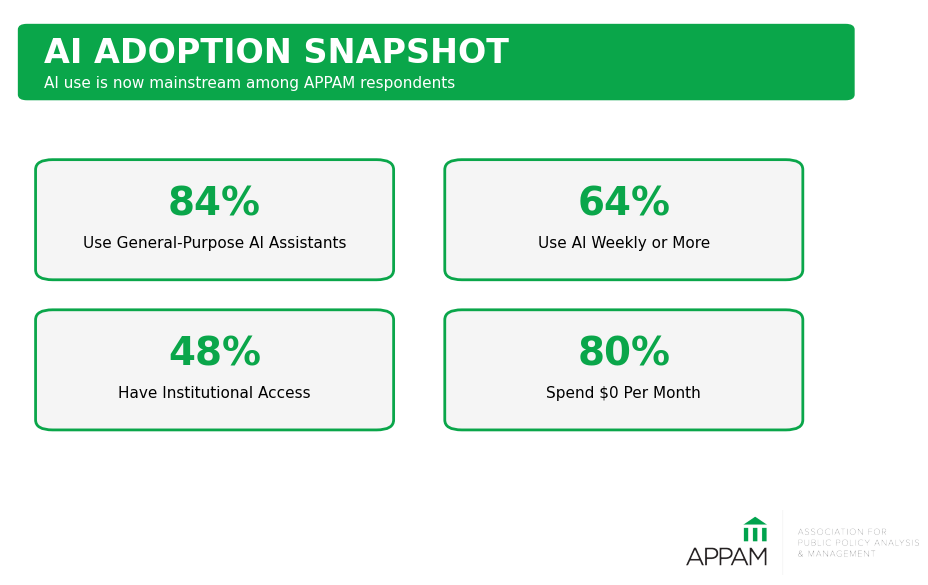
The AI survey results showed that AI has become a mainstream tool in policy research, with more than 80% of respondents using general-purpose AI assistants and nearly two-thirds incorporating them into their work at least weekly.
Despite widespread adoption, concerns about accuracy, data privacy, and ethics remain significant barriers to broader use. While many institutions provide access to AI tools, formal policies and guidance are often lacking.
Respondents expressed a strong interest in best-practice guidelines and hands-on training, signaling a need for greater institutional support as AI becomes increasingly integrated into research workflows. This is a gap that APPAM can fill.
You can view the full results here.
Widespread Use of General-Purpose AI: 84% of respondents have used general-purpose AI assistants (such as ChatGPT, Claude, Gemini, and Copilot) for research or policy analysis in the past 12 months, making these tools the most commonly used.
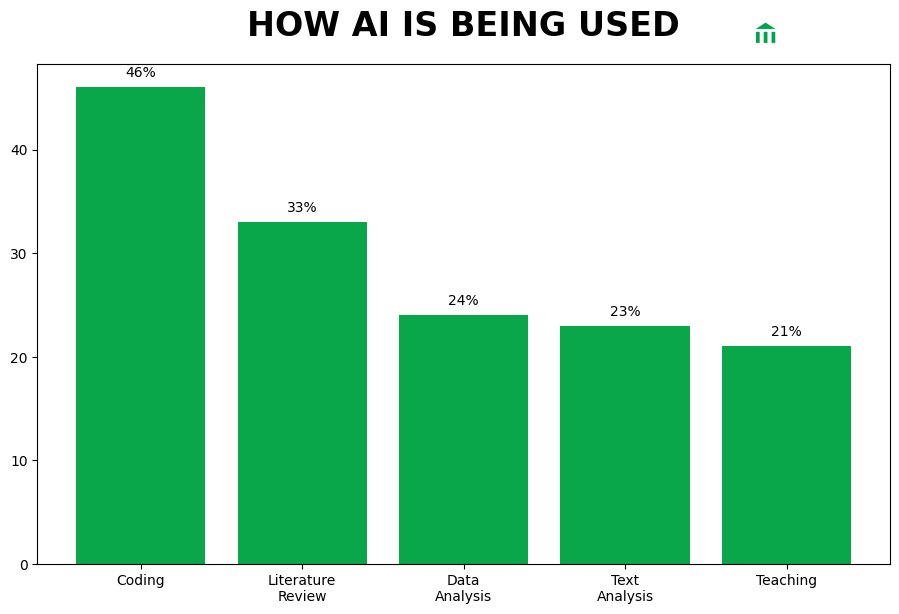
Frequency of AI Use: About one-third (33%) use AI tools daily or almost daily, and another one-third (32%) use them at least once a week but not daily, indicating regular integration of AI into research workflows.
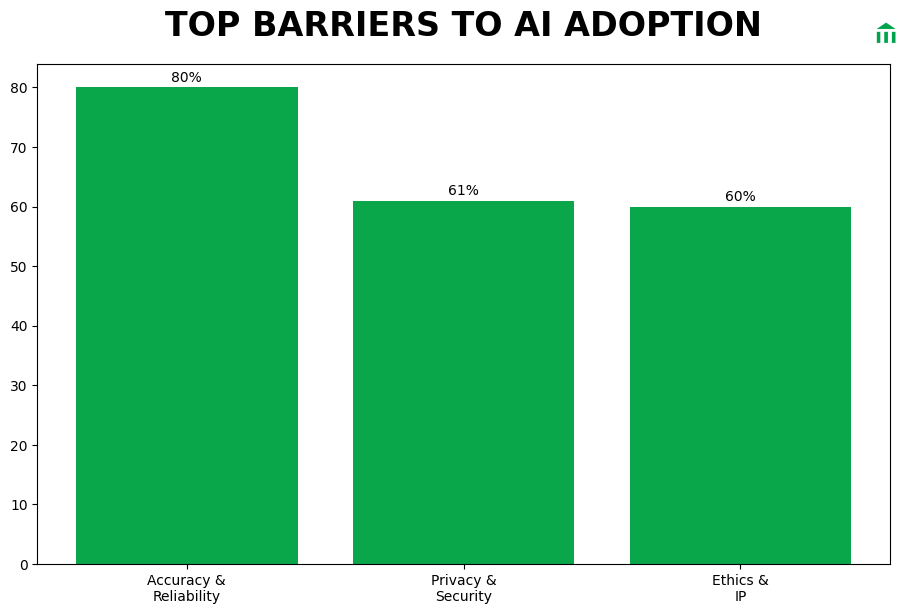
Barriers to Adoption: The most cited barriers to adopting or expanding AI use are concerns about accuracy/reliability (80%), data privacy/security (61%), and ethical or equity concerns (60%).
Institutional Support and Policies: 66% report their institution provides AI tool licenses, but only 30% are familiar with formal institutional AI policies, and 38% say no formal rules exist.
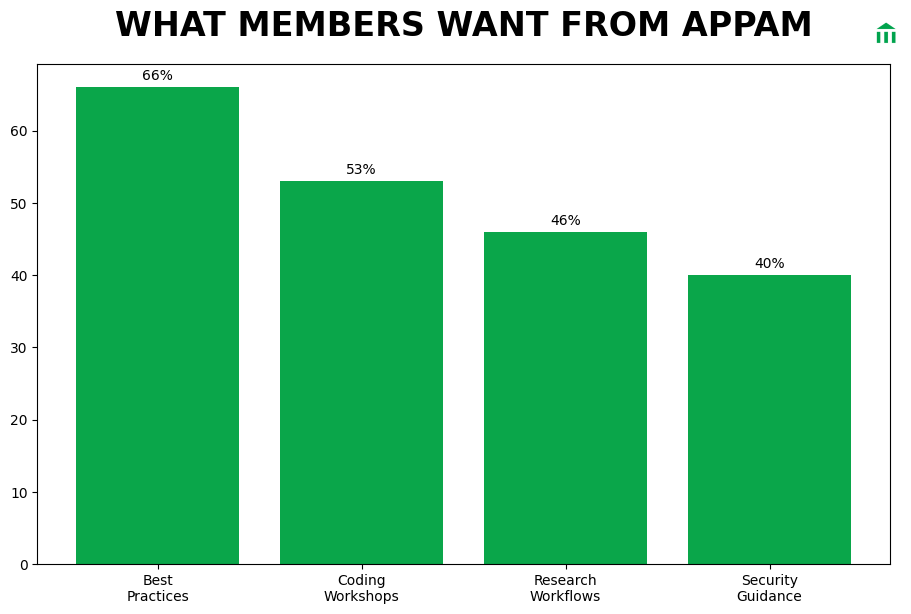
Desire for Guidance and Training: 66% want best practice guidelines for AI use in policy research, and 53% seek hands-on workshops, highlighting a strong demand for structured support and education.
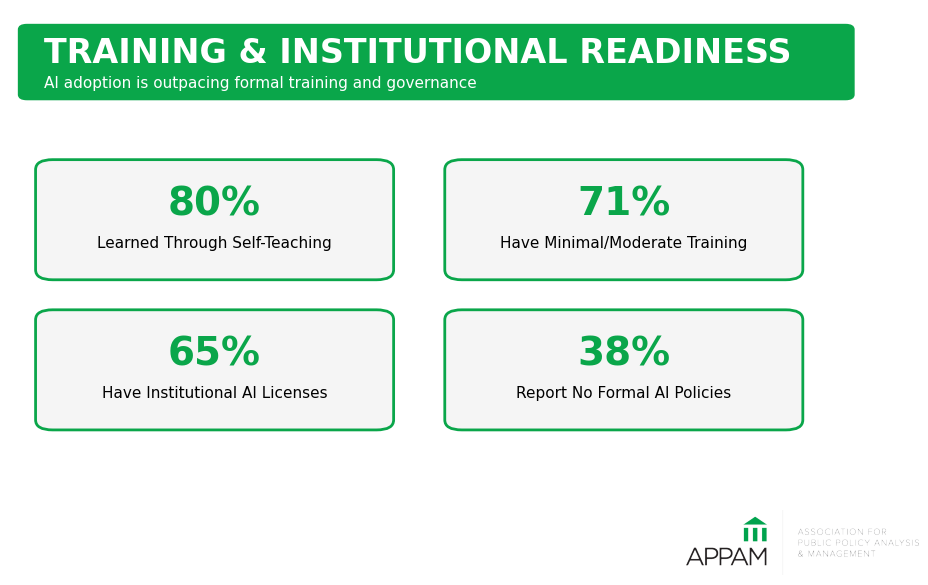
In the open-ended questions, there were noticeable themes reflecting a strong interest in practical guidance, training, ethical standards, and support for integrating AI into research and teaching.
For the question about requesting a concrete resource or initiative from APPAM, the most common themes were:
- AI in Academic Research (15%)
- AI Policy Adoption in Public Sector (11%)
- AI in Teaching and Assessment (9%)
- AI Training and Workshops (8%)
- AI Usage Guidelines and Best Practices (8%)
- Ethical AI Use Standards (7%)
- AI Misuse and Sensitive Data (6%)
- AI Citation and Attribution Standards (6%)
- AI Intellectual Property and Transparency (6%)
- Strong Interest in APPAM Programming: 75% of respondents would find it useful for APPAM to offer programming on AI tools for research and teaching.
- Demand for Clearer Standards: 91% agree or strongly agree that the profession needs clearer standards for when and how AI tools should be disclosed in research.
- Most Desired Types of Support: 66% want best practice guidelines for AI use in policy research (disclosure, attribution, reproducibility). 53% seek hands-on workshops on AI coding tools for empirical research. 46% are interested in workshops on AI for literature review, writing, and data workflows. 40% want guidance on data security and compliance when using AI with sensitive data. 39% would like curated recommendations of AI tools for researchers.
- Additional Needs and Suggestions (from open-ended responses): Themes include requests for AI training and workshops, ethical AI use standards, guidelines for citation and attribution, and credential/certification programs.