APPAM Policy Council and Leadership Election
The Policy Council is APPAM's governing board and is responsible for setting policy and creating strategy for the Association. It currently consists of four elected cohorts serving staggered, four-year terms. The APPAM officers (ex officio voting), the APPAM Executive Director, and the Editor of JPAM (ex officio non-voting) comprise the Executive Committee, which is also part of the Policy Council.
Elections for the new four-person cohort on the Policy Council, President-Elect, Vice President, and Secretary begin on Wednesday, December 10th, 2025, at 12:01 AM ET. The election will run until 11:59 PM Eastern Time on Friday, January 9th, 2026. Ballots will be emailed to all APPAM professional members in good standing.
Among the four-person cohort for the Policy Council, one is a researcher in a non-academic setting; one is an institutional representative elected by the Committee of Institutional Representatives; and two are researchers in an academic setting. All will serve four-year terms.
Finally, one student is appointed annually to serve a two-year term on the Policy Council. There are two student seats on the Board, and one new student is selected each year for service. Institutional Members may each submit one student nominee for consideration.
You can view a list of the current APPAM Officers, descriptions of each officer position, and the current APPAM Policy Council Members.
How to Vote
Voting for the next Policy Council cohort, who will serve from 2026 through 2029, and for Vice President and Secretary, who will serve from 2026 through 2028, will take place on Wednesday, December 10th, 2025, at 12:01 AM ET. The election will run until 11:59 PM Eastern Time on Friday, January 9th, 2026.
Follow the links below to the list of all nominees on this year's ballot. All current members will receive email instructions on how to vote on December 10th and will receive periodic reminders to vote until the January 18th deadline. If your membership has lapsed, you will not receive an email with voting instructions. If you want to check the status of your membership, please do so here. If you have not received an email and believe your membership is current, please contact Tara Sheehan.
The following is a list of nominees for APPAM's Officer Positions of Vice President and Treasurer. Please note that President-Elect Cynthia Osborne was appointed to her position by the APPAM Policy Council and voted in by acclamation at the 2025 Fall Research Conference Membership Meeting. Her statement is being presented for transparency and completeness and is included in the ballot, although she is running unopposed.
President-Elect Nominee
Uncontested; serves a 1-year term, automatically becomes APPAM President after the 2026 Fall Research Conference.
 Cynthia Osborne, Vanderbilt University
I am honored to be nominated for President-Elect of APPAM. I look forward to the opportunity to work with the leadership team, policy council, and staff to support this great organization through some challenging times. I have been a member of APPAM for 25 years and have attended nearly every annual conference. To play a role in shaping the next one would be a true honor.
Currently, I am a professor of early childhood education and policy at Vanderbilt’s Peabody College. I joined Vanderbilt in 2022 after being at the LBJ School of Public Affairs at UT Austin for nearly 17 years. I am also the founder and executive director of the Prenatal-to-3 Policy Impact Center, a nonpartisan research center at Vanderbilt that works with policy leaders to implement effective state-level policies that improve the lives of infants, toddlers, and their families.
I have had the privilege of serving on several National Academies committees focused on reducing poverty and increasing opportunities for young children, and to serve on several boards, including as a current board member of MDRC. I was also a 2023 Aspen Ascend Fellow.
Vice President Nominees
One will be elected; serves a 2-year term; there are two Vice Presidents on APPAM's Executive Committee and Policy Council, serving staggered terms.
 Greg Acs, Urban Institute
It is an honor and a privilege to be nominated for Vice President of APPAM. At this moment in history when ideology seems to override expertise, APPAM has never been more important as an organization that both promotes rigorous research and connects that research to policy professionals and practitioners. As Vice President, I would strive to strengthen the relationship between research and practice by grounding our work in the needs of policymakers, community leaders, and service providers. These connections help ensure that our work has real-world impacts, improves people’s lives, and reduces barriers to opportunity. Through ongoing support for APPAM’s Webinar Series and the APPAM Communities initiative as well as continued promotion of JPAM’s Policy Insights section, we can deepen the ties between research and practice.
Meeting the needs of policymakers and practitioners means using the most appropriate research methods to answer their questions. APPAM’s strength lies in its members diverse professional backgrounds and life experiences. Together, the work of APPAM’s members can integrate the power of large-scale survey and administrative data sets with the deep understanding of what those data mean in people’s everyday lives developed through strong qualitative analysis. As Vice President, I would seek to encourage more mixed methods, cross-disciplinary research collaborations to better inform policy decisions and support practitioners.
Currently, I direct the Tax and Income Supports Division at the Urban Institute where I have served as a Vice President since 2012. During my tenure, I have led inter-disciplinary teams of researchers exploring poverty, inequality, the effectiveness of public assistance programs, and economic and social mobility. Previously I served as Unit Chief for Labor and Income Security at the Congressional Budget Office.
 Johanna Lacoe, University of California, Berkeley/California Policy Lab
I am honored to be considered for Vice President of APPAM. As I conclude my four years on the APPAM Policy Council, I’m incredibly proud of the association’s achievements, resilience, thoughtfulness, and strategic approach as we have navigated recent industry disruptions.
Since my first conference in 2010, APPAM has been formative in my development and identity as a policy researcher. I’ve sought to pass that forward by mentoring junior scholars, curating diverse panels that feature new voices and students, and coaching colleagues to submit successful proposals. As an interdisciplinary scholar studying the intersection of criminal justice, education, and housing, APPAM is my professional home.
My professional experience is grounded in research, implementation, and service. As the Research Director of the California Policy Lab at UC Berkeley, I lead rigorous quantitative research in partnership with state and local agencies. At the same time, I serve as a Mayor-appointed Commissioner on the San Francisco Juvenile Probation Commission.
As chair of the Policy Relevance committee, I have worked to bring constructive, tough conversations to the forefront of APPAM. For example, we launched the live “Point/Counterpoint” conference sessions, tackling divergent perspectives on issues like the Grants Pass Supreme Court decision.
As Vice President, I will continue to support the next generation of scholars, facilitate robust debate on thorny policy issues, highlight evidence-based governance, and ensure that APPAM remains a leading force for change.
Secretary Nominee
One will be elected; serves a 2-year term.
 Heather Hill, University of Washington, Seattle
I would be honored to return to the APPAM Policy Council during this important time in our field. I served as an academic policy council member from 2019 to 2022, including as appointed chair of the Diversity, Equity, and Inclusion Committee. I've been a member of APPAM since I was an MPP student. It is truly my professional home. Over the years, APPAM meetings have been where I've connected to scholarship, jobs, mentors, and prospective students.
I serve as a faculty member at the Daniel J. Evans School of Public Policy & Governance at the University of Washington (UW), Seattle, where I study the implementation and impact of social policies, including welfare, minimum wage, the Earned Income Tax Credit, and state paid leave programs. In addition, I am the Director of the Evans School's PhD program and have been leading efforts at UW to increase researchers' interest and ability in engaging the public about research and evidence.
During a time when research, evidence, public service, and democracy are challenged daily, I have been really proud of the role that APPAM leadership and staff have played to support people, institutions, and facts. I would like to contribute to that effort.
Jordan Matsudaira, American University
 APPAM has been my academic home these past 25 years, and I’m honored to be nominated to join its leadership team as Secretary. Over the years I’ve benefited from the APPAM community’s diversity and embrace of rigorous multi-disciplinary approaches to understand and address real-world policy challenges. The Fall research conference has always been a source for intellectual inspiration and nourishment, and a welcoming place to discuss research and meet colleagues new and old.
I’ve spent my career using research and data driven insights to improve policy related to postsecondary education, workforce, and social safety net issues. I’m a Professor of Public Policy and Economics at American University’s School of Public Affairs where my research centers on how higher education policies and institutions affect economic mobility, and on the intergenerational impacts of social safety net programs. I’ve had the honor of working on these issues directly serving in federal government roles, for example as Chief Economist of the Council of Economic Advisers in the Obama Administration where I headed a multiagency team that developed the College Scorecard, and led analyses that supported executive actions such as setting minimum wages for federal contractors and simplifying the application process for financial aid for college. More recently, I served as Deputy Under Secretary and the first ever Chief Economist—an Office I created—at the U.S. Department of Education in the Biden Administration, leading regulatory efforts to revise student loan repayment plans and to strengthen accountability, especially in the for-profit college sector, and assembling a team of academic researchers that used analyses of the Department’s vast administrative data to inform real-time policy development of higher education policy.
These roles have allowed me to develop a grounded sense for how to better connect the work of researchers in the APPAM community to policymakers, and I’ve launched a Center at American University dedicated to helping connect federal and state policy makers with insights from the policy research community around higher education and workforce issues. If elected I’d like to help APPAM strengthen its role in connecting researchers with effective ways to contribute to policy by a) creating more opportunities for researchers to hear from policymakers directly to hear about the issues they’re struggling with and the policy questions where research answers would be most constructive in moving solutions forward; and b) hosting training opportunities for researchers to learn how to effectively engage with federal policymaking—especially regulatory—processes, and to ensure policymakers are aware of their important work.
Back to top of page.
Two will be elected to serve a 4-year term.
 Luisa Nazareno Aguiar, Virginia Commonwealth University
I am honored to be considered for APPAM Policy Council. APPAM has been my academic home since my first year in graduate school, which was also my first year living in the United States. Over nearly a decade of attending the annual conference, I have participated as panelist, chair, discussant, and organizer. I have served several times as a reviewer for the Poverty and Income Policy and the Employment and Training subcommittees. Through APPAM I have met mentors who continue to support my career. More recently, I helped foster a new community within APPAM, the AI community, which has been so rewarding.
Through the annual conferences and other events, I have substantially expanded my professional network and strengthened my connections with scholars and friends throughout the country and the world. I always leave each conference with renewed energy and excitement about continuing to do policy research that can shape better policies and outcomes for all people, along with a strong feeling of belonging to a community. I have gained so much from APPAM over the years that it feels natural to take further steps to give back to this incredible association.
My name is Luisa Nazareno. I am an Assistant Professor at the L Douglas Wilder School at Virginia Commonwealth University. My research examines how technologies affect workers, including AI, platforms, and broadband. I also study labor deregulation, social protection, and inequality, building on several disciplines. My ongoing research (NSF funded) investigates how scholarly work is consumed by stakeholders outside academia and whether it influences their behaviors and policy preferences. This work reflects my commitment to connecting research with real policy needs, which aligns with APPAM’s mission.
APPAM is growing every year! If elected, I would like to contribute to and learn from APPAM’s ongoing efforts. I would also like to help create new opportunities for skill building and professional development, such as grant writing support, workshops on using AI in research, and structured feedback for ongoing work. These activities would benefit members at all career stages, especially junior scholars. I would also be excited to support the expansion of APPAM’s international footprint. Thank you for your consideration.
 Monica Garcia-Perez, Fayetteville State University
I am honored to be nominated to serve on the APPAM Policy Council! Since early in my career, APPAM has connected me to researchers and practitioners focused on rigor and real-world impact. Serving on the Council would be an opportunity to help sustain and expand that impact, drawing on my experience to advance APPAM’s mission of improving public policy and management through empirically grounded, equity-focused approaches.
I am the Distinguished Professor of Economics at Fayetteville State University, an HBCU in the UNC System. I am also an external affiliate of population research centers at Duke and UNC–Chapel Hill. Trained as an economist at the University of Maryland–College Park (PhD), University College London (MSc), and Universidad Central de Venezuela (BS), I have built my career in public institutions serving diverse, often under-resourced communities. That experience has shaped how I think about the role of evidence, equity, and community engagement in public policy. I study how policies affecting health coverage, access to care, and labor market opportunities shape intergenerational outcomes for immigrants and racialized minorities. Alongside research, I have invested profoundly in professional service and mentoring. I have served as President of the American Society of Hispanic Economists (ASHE) and as director of its mid-career mentoring program, as well as a mentor and instructor in the AEA Summer and Mentoring Programs and related initiatives. Through these roles, I have worked to build pipelines for scholars from historically excluded backgrounds, create supportive professional communities, and ensure that leadership bodies in our field better reflect the diversity of the populations we study.
If elected to APPAM’s Policy Council, I would bring this combined experience in research, institutional leadership, and mentoring to three priorities. First, I would work to further embed health equity, immigration, and racial and ethnic inequality as cross-cutting themes in APPAM’s conferences, publications, and professional development activities. Second, I would strive to strengthen APPAM’s engagement with HBCUs, HSIs, regional public universities, and community partners, ensuring the association remains a welcoming, accessible home for scholars and practitioners across different institutional types. Third, I would support efforts that enhance mentoring, networking, and leadership opportunities for early-career researchers and practitioners, especially those from underrepresented groups. I am ready and excited to start this work!
 Agustina Laurito, University of Illinois, Chicago
I am very excited to be considered for APPAM’s Policy Council. I have been a member of APPAM since graduate school, and I consider it my intellectual home. Over the years, I have presented my work during the Fall research conference, reviewed conference abstracts, organized sessions, and served as discussant on several panels. In addition, I have consistently participated in APPAM’s mentoring program. I was a mentee in my last year of graduate school, and I have served as mentor for several years.
I am an Associate Professor in the Department of Public Policy, Management, and Analytics at the University of Illinois Chicago (UIC) where I teach undergraduate-level policy courses and conduct interdisciplinary research at the intersection of social policy, education, and health in the United States (U.S.) and Latin America, where I was born and grew up. My work also tries to identify the factors that affect the outcomes and wellbeing of immigrants and Latinos living in the U.S.
As a policy scholar, I have always valued APPAM for the variety of policy areas and topics it covers, its embrace of interdisciplinary work, as well as its engagement with practitioners. Should I be elected to the Policy Council, I will work to continue fostering an organization that attracts a diverse membership committed to rigorous policy and public management research from a variety of theoretical, disciplinary, and methodological approaches. I would also like to help grow APPAM’s engagement with researchers and practitioners who do international policy work in various contexts, and in low- and middle-income countries in particular. Finally, I hope to continue advancing APPAM’s commitment to growing the policy field through mentoring and professional development events for graduate and undergraduate students, as well as early career researchers. I have greatly benefited from being part of APPAM all these years, and I would be honored to have the opportunity to give back by being part of APPAM’s leadership in the coming years.
 Brian McCabe, Georgetown University
I am honored to be considered for a position on the APPAM Policy Council. Since my earliest APPAM conference as a graduate student, the interdisciplinary community of researchers, policymakers and educators at APPAM has been an important intellectual home.
I am a Sociologist at Georgetown University studying a range of housing and urban policy issues, including affordable housing programs and municipal campaign finance. I recently co-authored a book on an innovate municipal campaign finance program in Seattle, Democracy Vouchers and the Promise of Fairer Elections in Seattle (2024), and I am the co-author of a forthcoming book on rental assistance programs, The Housing Lottery: How Scarcity Drives America’s Largest Rental Assistance Program (2026).
In addition to my academic work, my experience bridges the gap between our research and policy communities. From 2022 – 2024, I served as the Deputy Assistant Secretary for Policy Development (PD&R) in the U.S. Department of Housing and Urban Development (HUD). While leading the agency’s policy development work, I saw firsthand the value of high-quality, accessible research for policymakers – the type of research supported by APPAM.
On the Policy Council, I will work to strengthen the APPAM community as an interdisciplinary home for high-quality, engaged research. I value the intersection of academic, research, advocacy and policy communities brought together by the organization. From my home in Washington, DC, I am especially aware of the urgency of building evidence to strengthen policy in today’s policy climate.
 Mike Levere, Colgate University
I am honored to be nominated to serve on the APPAM Policy Council. I am an assistant professor of economics at Colgate University, and before that worked at Mathematica as a senior researcher. Having spent extensive time in both academic and non-academic settings since completing my PhD almost a decade ago, I will bring a valuable perspective to the policy council that combines an understanding of academia with what makes our work relevant for policymakers.
My research primarily focuses on issues affecting people with disabilities, and especially disability benefit programs. My research has two primary threads. First, exploring supports and services that can help improve outcomes and promote well-being among people with disabilities. Second, the factors that lead or prevent people, particularly youth with disabilities, to participate in disability benefits. These questions are especially important in today’s climate to ensure everyone, especially those who face significant disadvantages, can have an opportunity to succeed.
APPAM has been my professional home since I first started attending the annual conference about ten years ago – I value the intellectual connection with people who genuinely care about improving policy for social good. In this challenging time where research and evidence-based policymaking is being disrupted, having a community through APPAM is more important than ever. I would be excited to serve as a member of the APPAM Policy Council and to contribute to thinking about how our research can continue to make a difference.
 Elizabeth Wilson, Dartmouth College
I am a Professor of Environmental Studies at Dartmouth College and served as Founding Director of the Irving Institute for Energy and Society (2017-2022). My research examines how policy, technology, and institutions evolve to support energy systems, with current work focused on offshore wind, transmission planning, and energy governance. APPAM has been central to my scholarly identity for nearly two decades, and engaging with an academic community where rigorous, applied research thrives has been a cornerstone of my career. As a Policy Council member, I will work to sustain APPAM’s commitment to evidence-based policymaking and to strengthen connections between academic, practitioner, and public sector perspectives.
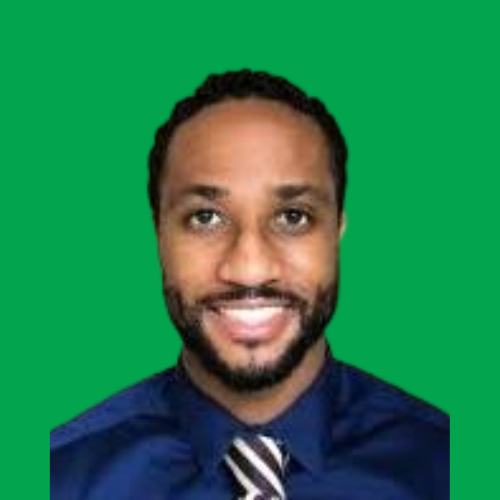 James Wright, Arizona State University
I am happy to be part of the APPAM community over the last decade, and I am honored and humbled to be nominated to serve on the APPAM Policy Council. I am an Associate Professor in the School of Public Affairs and the School of Criminology and Criminal Justice at Arizona State University. My research focuses on how to dismantle structural racism in both public policies and organizations.
Over the past decade I have served in serval roles. I have reviewed conference proposals, organized and chaired sessions, served as a mentor to graduate students, and served on the planning committee. Moreover, I was selected as an APPAM Equity & Inclusion Young Professionals Fellowship.
I have always known since attending my first APPAM conference as a PhD student that I wanted to make the conference my academic home because of its inclusive and interdisciplinary orientation. Given my experience, there are several items I would prioritize as a member of the policy council. First, increasing the interdisciplinary nature of the conferences and promoting more opportunities for cross-disciplinary collaborations. As higher education is changing, there is an increased need for researchers to collaborate. Second, as a scholar that studies equity and inclusion, I would strive to make APPAM a more equitable, inclusive and diverse organization both intellectually and culturally. Third, I would like to help grow APPAM’s international focus to identify best practices and policies that can be translated to multiple settings.
Back to top of page.
Researcher Working in a Non-Academic Setting
One will be elected to serve a 4-year term.
 Korin Davis, Washington Center for Equitable Growth
I’m honored to have been nominated to serve as a representative from a non-academic setting on APPAM’s Policy Council. APPAM is a critical nexus for scholars from across disciplines to discuss research findings with one another and with practitioners. A testament to APPAM’s success is the engagement of policy practitioners from all levels of government. Ensuring policymakers are grounding solutions in evidence is essential, but it’s also essential that research questions and designs lead to actionable insights. That is where my skillset and experience lie – in developing policy-relevant research agendas and ensuring research findings are accessible to policymakers. As a member of the Council, I would aim to build on APPAM’s success while also working to identify innovative strategies to increase skill-building opportunities and policy engagement for its members.
I have 20+ years of experience, most recently at the Washington Center for Equitable Growth - a non-profit research and grantmaking organization – and prior to that at the Brookings Institution. At Equitable Growth I oversee our grantmaking and academic network engagement. Our grantmaking focuses on inequality in all its forms and its effect on broadly shared growth. Recent efforts have included: the care economy; countercyclical fiscal policy; competition and work in the era of AI; and how to boost innovation and support regional economic vitality as part of the energy transition. I spearheaded an innovative approach whereby research agendas were developed in close coordination with appointed and career staff in policy, evaluation, and implementation positions, along with scholars from academia and think tanks. Through this work I’ve tested and developed a variety of strategies to strengthen the feedback loop between research and policy and gained an understanding of the challenges and unique value-add of interdisciplinary work.
I’ve also built programming to grow academics’ skills and experience engaging with non-academic audiences and launched several fellows programs to mentor and develop early career academics with a focus on supporting scholars from marginalized communities. I have extensive experience with stakeholder engagement and organizing in-person and virtual conferences to meet strategic goals. I would be thrilled to bring this experience to APPAM’s annual conference and member engagement activities and to learn from the distinguished members of the Executive Committee and Policy Council.
 Colleen Graber, Public Policy Associates
To the Policy Council, I bring experience as a leader in a non-academic setting. I am the chief operating officer at Public Policy Associates and have managed research, evaluation, and strategic consulting projects on behalf of government agencies, associations, and other organizations for 16 years. My research interests span child care, K-12 education, housing, and workforce development. My academic background is in U.S. history. Using mixed methods and a focus on utilization, I have seen first-hand how research can impact public policy decisions and program improvements.
I joined APPAM in 2018 and have found the APPAM conferences extremely rewarding. I look forward to giving back to the association through my service on the council. Professionally, continuous quality improvement, applied research, equitable practices, and student growth are recurring themes. On the Policy Council, I can apply this knowledge to further the APPAM mission to improve public policy and management. I would also like to help broaden understanding of the value of research for responsible policymaking while helping to build on the strengths of APPAM’s networking and learning opportunities.
 Samuel Mann, RAND Corporation
I am honored to be nominated for APPAM’s Policy Council. I first attended APPAM as a postdoctoral researcher at Vanderbilt after moving to the United States in 2021, and it has been my intellectual home ever since. I am now an Associate Economist at RAND (Washington DC office) and hold affiliations with IZA and GLO. My work examines how public policy shapes health and economic outcomes, especially for vulnerable populations, and sits squarely at the research–policy intersection. I partner with state and local agencies to answer the questions they are actively confronting, and I work across local, state, and federal domains to ensure that policy is informed by rigorous evidence.
Service and field-building are central to how I approach this work. Since first attending APPAM, I have chaired, discussed, reviewed, and organized sessions for the Fall Research Conference, every year. I currently co-chair APPAM’s Health Program, direct the ASHEcon Diversity Scholarship, for the past three years, have co-led APPAM’s first-generation researcher community, and this past meeting was on the poster award judging panel. These roles have taught me how to convene across disciplines and institutions, lift early-career scholars, and broaden participation.
If elected, I will focus on advancing APPAM’s mission by strengthening mentorship and fellowship pathways so that scholars from underrepresented backgrounds, institutions, and sectors are visible, supported, and connected to policy-relevant work. I will also deepen APPAM’s ties with government and nonprofit partners to expand dissemination of information regarding opportunities for data access, funding, and practitioner-facing dissemination, with the overarching goal of improving the evidence that informs policy making at the local, state, and national level.
Back to top of page.
Institutional Member Representative
One will be elected for a 4-year term.
**Please note: only institutional members vote for the institutional member representative on the Policy Council.**
 Andrea Hetling, Rutgers University
I am honored and very excited to be considered to serve as a representative of our institutional members to the APPAM Policy Council. APPAM’s mission— improving public policy and management by fostering excellence in research, analysis, and education—reflects my own professional commitments. And, having served as the institutional representative for my university for over a decade now, I know the pivotal role that institutional members play in supporting and advancing this mission.
APPAM has been my primary professional organization since I was a doctoral student over 25 years ago. I regularly attend the annual conference and look forward to the significant work presented each year, which showcases rigorous research that is accessible to policymakers and meaningful to communities. In my own research, I have seen how evidence can improve policy outcomes when it is transparent, accessible, and developed in partnership with diverse stakeholders. I am a Professor at the Bloustein School of Planning and Public Policy at Rutgers University - New Brunswick, a large public university which also values publicly engaged scholarship. My research focuses on how public programs and policies can contribute to economic well-being and financial stability of vulnerable populations, including families experiencing poverty and survivors of intimate partner violence.
As a first-generation college graduate, policy researcher, and academic, I am deeply committed to strengthening pathways and programs for early-career scholars from diverse backgrounds. My own experience illustrates how institutional support and mentorship shape a scholar’s trajectory, and I am pleased to see the growth in student-focused, professional development, and mentorship opportunities at APPAM. I am committed to ensuring that APPAM remains a welcoming and inclusive community for scholars and practitioners at every stage. I will also work to ensure that APPAM continues to respond to changing external forces, whether in funding, politics, or technology, in a way that supports the success of all members.
In addition to APPAM’s positive impact on me as an individual researcher, I have grown as an administrative leader by serving as an institutional representative, bringing lessons learned at those meetings back to my institution. I am the Associate Director of the Heldrich Center for Workforce Development and served as the Director of the Public Policy Program at Bloustein for five years. Through these roles, I have gained a deep understanding of the opportunities and challenges institutions face in advancing rigorous policy scholarship, in training and employing policy researchers, and in translating evidence into practice. I have also observed the importance of collaboration across institutions.
If elected, I would work to ensure that APPAM continues to achieve its mission by elevating the needs and perspectives of its institutional members. I see great value in prioritizing initiatives that support partnerships between academia and practice, strengthen the skills of seasoned and new policy researchers, and expand the reach of our work to policymakers and communities. I would be grateful for your support and the opportunity to contribute to APPAM’s continued leadership.
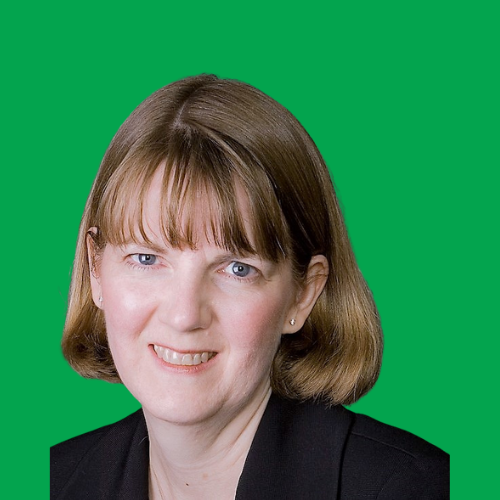 Lori Taylor, Texas A&M University
I would be honored to represent the Institutional Members of APPAM on the APPAM Policy Council. I am a Professor and Head of the Department of Public Service and Administration at the Bush School of Government and Public Service, Texas A&M University, where I also hold the Joe R. and Teresa Lozano Long Chair in Business and Government. I have been representing the Bush School as its institutional member of APPAM since 2018 and was an active individual member for years before that. I believe that the Institutional Members of APPAM should be active participants in the organization and was especially proud to do my part by helping the Bush School host APPAM’s September 2025 Policy on the Rocks event at our Washington DC teaching site.
My research focuses on regional variations in labor cost; the determinants of cost and efficiency in the education sector; and teacher compensation. I developed the National Center for Education Statistics’ Comparable Wage Index (CWI) and Comparable Wage Index for Teachers (CWIFT) which many of my peers have found to be useful tools for policy analysis. In 2016, my co-author and I received the Journal of Education Finance Outstanding Article of the Year Award, and in 2020, I was honored to be named a Distinguished Fellow of Research and Practice by the National Education Finance Academy.
I have a lot of relevant experience that I can bring to the APPAM Policy Council. I have served on the Board of Governors for the Regional Education Laboratory Southwest, on the Editorial Board for AERA Open, and on the Board of Directors for the Association for Education Finance and Policy. I learned a lot about building connections between policy and practice during my years as Director of the Bush School’s Mosbacher Institute for Trade, Economics and Public Policy and as a Senior Economist and Policy Advisor for the Federal Reserve Bank of Dallas.
I believe that APPAM’s Institutional Members bring a lot to the table and have benefitted enormously from the opportunities APPAM can create. If I am fortunate enough to be elected to the Policy Council, I will work hard to provide insightful leadership and to represent the diverse interests of the various types of member institutions. One of my goals would be to ensure that APPAM’s Institutional Members have no difficulty explaining the value proposition of continued membership in this important organization.
Back to top of page.